


Nike helped create a coaching program designed to keep girls in sports.
Three years later, the program is expanding into college classrooms and through a partnership with a national sports governing body, while its own FAQ defines “girls” to include anyone under 18 who identifies as one.

Sarah Barker, a former coach and creator of The Female Category, spent months reviewing CoachingHER, its training modules and the research cited to support them. She told OutKick in an exclusive interview that what she found does not match how she believes the program is being presented to coaches.
“Everything about it tells me that it is not, in fact, what it is being sold as,” Barker said.
NIKE SHAREHOLDERS REJECT TRANSPARENCY PROPOSAL AS FAITH-BASED FIRM QUESTIONS DEI COMMITMENTS
CoachingHER launched in 2023 as a collaboration between Nike and the Tucker Center for Research on Girls & Women in Sport at the University of Minnesota.
Nike said at the time that it developed the free digital resource to help coaches recognize unconscious gender biases and stereotypes that negatively affect girls’ experiences in sports.
Barker first encountered CoachingHER through the Minnesota State High School League after spending 10 years as a coach.
She decided to take the course herself.
“I did the training modules and I interviewed the director of the Coaching Her program at the Tucker Center,” Barker said.
Then she kept digging.
Barker questions CoachingHER’s focus on gender bias
CoachingHER’s current FAQ defines “girls” as someone under 18 “who was assigned female at birth or who identifies as a girl” and says the program is “inclusive of gender-expansive identities,” language Barker said was displayed more prominently when she first investigated the program in 2024.
For Barker, those few words change the meaning of the training that follows.
The CoachingHER website says its courses give coaches “girl-centered strategies” and tools to create “supportive, inclusive environments for girls in sports.”
Barker said that definition becomes especially important in a module addressing bodies and identities.
“They exhort coaches in one of the training modules to accept all, and all is in capital letters, all bodies and identities,” Barker said.
MEGAN RAPINOE’S LATEST DEFENSE OF MALES IN WOMEN’S SPORTS COLLAPSES UNDER ITS OWN HYPOCRISY | DAN ZAKSHESKE
On its face, Barker said much of the advice sounds unobjectionable. But she argues the program’s definition of “girls” changes the context because it also encompasses transgender-identifying athletes.
Barker’s broader criticism is that CoachingHER’s emphasis on coaches’ gender biases does not match what she found in the research on why girls leave sports.
A current CoachingHER article, citing 2024 research from Dove and Nike, says low body confidence is the “No. 1 reason girls quit sports.” But the program describes its mission as addressing “the unconscious gender biases and stereotypes held by coaches.”
The Tucker Center and Nike have said coaches were chosen as a focus because earlier research identified them as an important influence on girls’ sports experiences. In a 2023 article about the creation of CoachingHER, Tucker Center director Nicole LaVoi and former Nike social-impact executive Caitlin Morris also said workshops with girls and coaches helped shape the program’s focus on gender stereotypes.
Barker argues that explanation does not resolve the disconnect she found in the research on why girls actually leave sports.
“They knew that the number one reason girls drop out of sports was concerns with body image,” Barker said.
She said CoachingHER director Alicia Pelton acknowledged the same point when Barker interviewed her in 2024.
Yet Barker said that in the research and lists of dropout factors she reviewed, coaches’ gender bias and their understanding of gender identity were not identified among the leading reasons girls leave sports.
“What’s weird about this is that of the many reasons listed for girls dropping out of sports, their coaches’ gender bias was never listed, not in the Tucker Center’s own research,” Barker said. “It was never listed, not even in the top 15 reasons.”
That led Barker to question why a program marketed as a way to keep girls in sports was focused so heavily on changing coaches’ attitudes about gender.
“Why would they build an entire program around blaming coaches when they know that that is not true?” she said.
THE CRAIG CARTON SHOW–UNFILTERED, UNAPOLOGETIC AND UNMISSABLE. DOWNLOAD HIS DAILY PODCAST NOW!
Nike helped create CoachingHER, but its current financial role is unclear
When Nike publicly announced the program in March 2023, the company said it had developed CoachingHER in partnership with the Tucker Center.
Nike’s website continues to promote CoachingHER in 2026, describing it as a resource “created in partnership with the Tucker Center for Research on Girls and Women in Sport.”
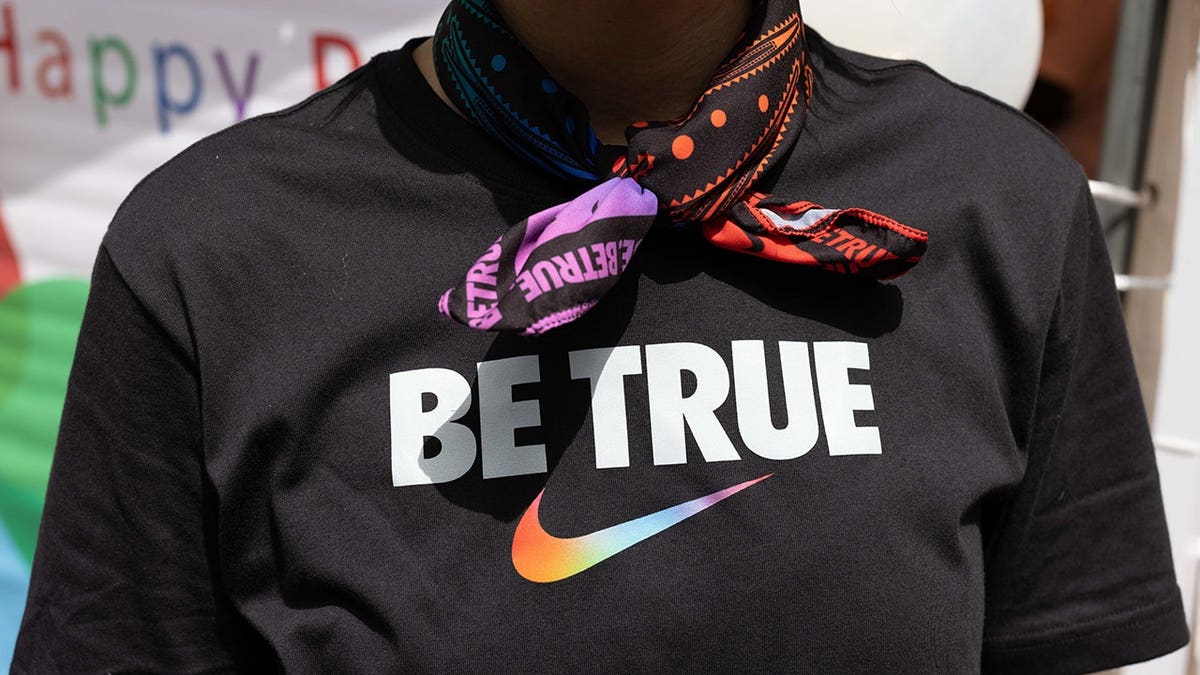
The CoachingHER website also continues to display Nike’s logo under the words “Brought to you by.”
Barker said she separately discussed Nike’s involvement with CoachingHER program director Alicia Pelton during her 2024 investigation.
“When I interviewed Alicia Pelton … she was open about the fact that Nike funded this program,” Barker said. “I don’t know the amount. I asked and was not told the amount.”
WOMEN’S SPORTS MEDIA OUTLET BACKS TRANS ATHLETES, THEN AVOIDS QUESTIONS FROM REPORTER WHO DISAGREES
While Nike’s current financial involvement with CoachingHER is unclear, its public connection to the program remains. In January 2026, the University of Minnesota described CoachingHER as “powered by Nike.”
OutKick asked Nike whether it currently funds CoachingHER, what role the company currently plays in developing or reviewing the curriculum, and whether Nike endorses the program’s definition of girls.
OutKick also contacted the Tucker Center and CoachingHER seeking responses to Barker’s criticisms and clarification about Nike’s current role in the program.
Neither Nike nor the Tucker Center responded before publication.
CoachingHER expands its reach
Since Barker first investigated CoachingHER in 2024, the program has expanded beyond youth coaches.
The Tucker Center’s Educational Champions initiative encourages professors and institutions to incorporate individual CoachingHER modules or full courses into subjects including coaching education, sports psychology, gender studies, athlete development and physical education.
In May, USA Weightlifting announced a partnership with the Tucker Center that gives eligible members access to CoachingHER courses through its learning platform. USA Weightlifting described the training as a way to help coaches “recognize and reduce unconscious gender bias” and build environments that support girls’ participation and long-term success.
Barker believes coaches are being taught to view biological sex differences through the lens of gender bias while being told the program’s purpose is to protect girls’ opportunities in sports.
CLICK HERE FOR MORE OUTKICK SPORTS COVERAGE
Barker calls that “girl washing.”
“Girl washing is calling something beneficial to girls, when in fact it’s actually harmful to girls,” she said.
CoachingHER says its mission is to reduce gender inequalities in sports by helping coaches challenge unconscious gender biases and stereotypes.
Barker said she shares CoachingHER’s stated goal of keeping girls in sports. Her objection is to the program’s definition of “girls” and what she believes follows from it.
“This is a group of people that’s going to need a lot of re-education, a lot of heavy-duty indoctrination,” Barker said of coaches who maintain sex-based distinctions in girls’ sports.
“That is what Coaching Her is. It is an indoctrination program for coaches … to normalize boys in girls sports,” she added.
“It is not about girls, it is not about keeping girls in sports at all,” she said. “What’s really galling is that they’re lying about it and getting away with it by calling this beneficial.”
“It is the opposite of beneficial.”
Read the full article here