
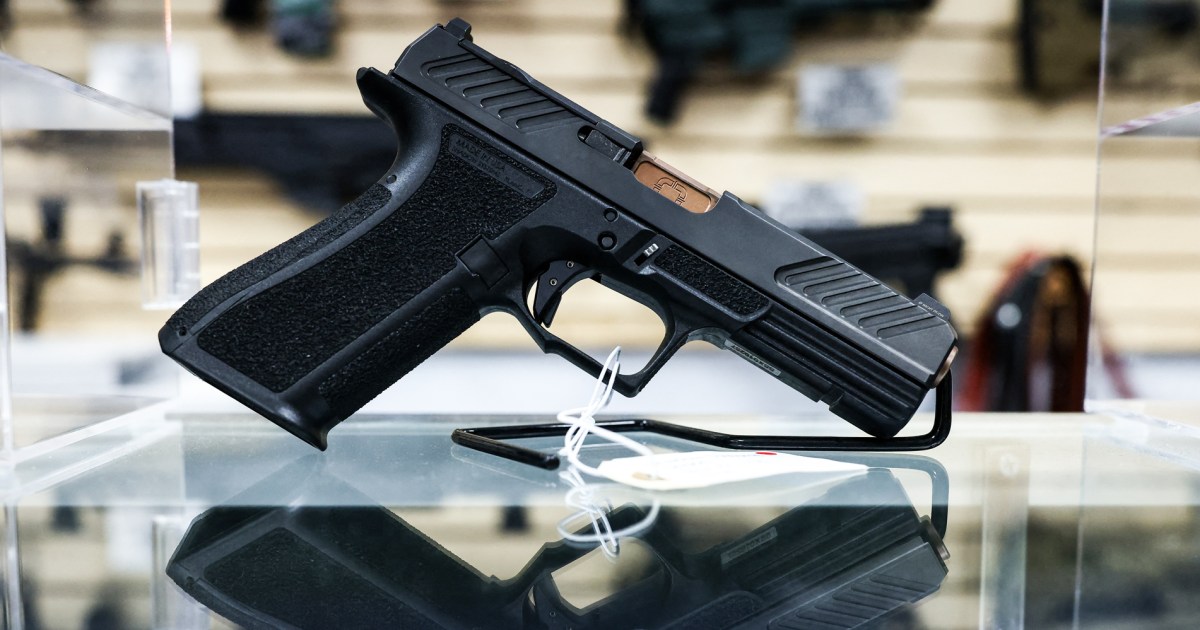
WASHINGTON — The Supreme Court on Thursday struck down a Hawaii gun restriction that limits when people can carry firearms on certain private properties open to the public, saying it infringes on the right to bear arms.
On a 6-3 vote, the court invalidated the measure that requires people with concealed carry permits to seek permission from a property owner before entering. It has been dubbed the “vampire rule” because, as in the classic novel “Dracula” and related tales, vampires can only enter someone’s home if they are invited in.
The court, often supportive of gun rights, concluded that the provision violates the Constitution’s Second Amendment. The court’s conservatives were in the majority, while the three liberals dissented.

“The effect of this new rule is to impose severe restrictions on the daily activities of residents who have satisfied the state’s rigorous requirements for the issuance of a carry permit,” conservative Justice Samuel Alito wrote for the court.
“This regime hobbles what the Second Amendment protects: the right of Americans to carry arms for self-defense as they go about their daily lives,” he added.
In dissent, liberal Justice Elena Kagan said she would have upheld the law because it is a “modern-day analogue of colonial and founding era laws that similarly prohibited carrying firearms onto private property without the owner’s affirmative consent.”
The ruling is somewhat limited in its practical impact because most states do not have provisions similar to that of Hawaii. In the majority of the country, the law already assumes that people can enter private properties while armed if they have a permit to carry a firearm.
As a result, the ruling will only affect a handful of states that took a similar approach to Hawaii: New York, New Jersey, Maryland and California.
Gun rights groups welcomed the ruling, saying the Hawaii measure was an attempt to circumvent the Supreme Court’s 2022 ruling in a case called Bruen v. New York Rifle and Pistol Association that established, for the first time, that Americans have a right to carry a firearm in public.
“Today, the Supreme Court drove the final stake through one of the most cynical anti-rights schemes devised after Bruen,” Brandon Combs, president of the Firearms Policy Coalition, said in a statement.
Groups that back gun restrictions downplayed the impact of the decision.
Janet Carter, a lawyer at Everytown Law, said that property owners still have a lot of discretion to decide whether people can carry firearms onto their property.
“The Supreme Court … cannot take away a private property owner’s authority over their own land,” she added.
Enacted in 2023 as part of a broader gun law, the Hawaii rule applies to private properties open to the public, such as gas stations, stores and restaurants. Anyone who violates the rule could face up to a year in prison.
Other provisions of the law were also challenged and have been partly blocked by lower courts.
Maui residents Jason Wolford, Alison Wolford and Atom Kasprzycki, who are gun owners with concealed carry licenses, as well as the Hawaii Firearms Coalition, a gun rights group, challenged the law in court. At the Supreme Court, they received backing from the Trump administration.
A federal judge earlier blocked the private property provision, but the San Francisco-based 9th U.S. Circuit Court of Appeals ruled in the state’s favor in September 2024.
Read the full article here