
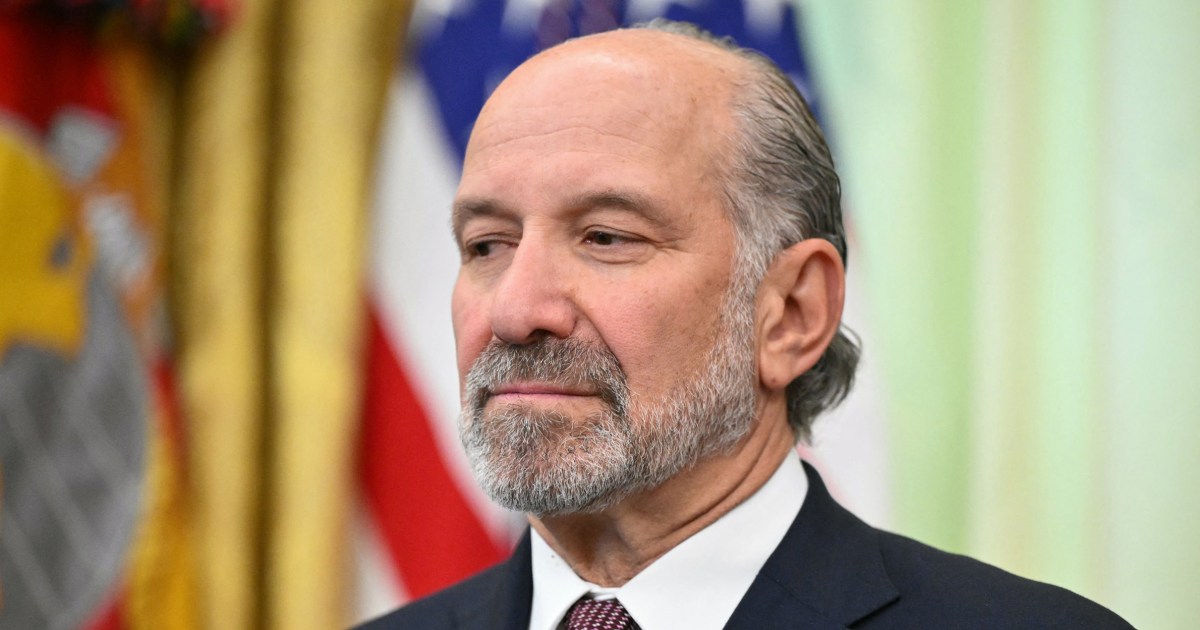
The U.S. government is allowing Anthropic to deploy its Mythos 5 model to a select group of customers and partners, according to a letter from Commerce Secretary Howard Lutnick to Anthropic that was seen by NBC News.
In the letter, Lutnick wrote that the government was confident in the guardrails Anthropic had put in place to allow trusted users to access the powerful AI system. The Commerce Department did not immediately respond to a request for comment Friday night.
Mythos 5 access will be restored to around 100 organizations that include government agencies and private companies, according to people familiar with the matter. The individuals said the restoration will help ensure the organizations can use the model for defensive cyber purposes. Semafor first reported the letter.

“Today, the government notified us that Mythos 5, our strongest cybersecurity model, can be redeployed to a set of US organizations that operate and defend critical infrastructure,” Anthropic wrote in a post on X Friday night.
A source close to the company said that Anthropic will continue to hold discussions with the government over the weekend as it seeks to restore access to Fable 5, its most recent and most powerful mass-consumer model. Two weeks ago, Lutnick invoked export control authorities to require Anthropic to shut off access to its two most capable systems, Mythos 5 and Fable 5, citing threats to national security.
Lutnick’s Friday move that allows Anthropic to restore limited access to Mythos 5 comes hours after Anthropic competitor OpenAI announced it would release its latest and most advanced series of models, the GPT-5.6 family, in phases per the federal government’s request.
OpenAI CEO Sam Altman wrote on X that the staggered debut was “bad news,” as the company had instead planned on a wider, open-access launch.
In a blog post announcing the new models, OpenAI wrote that the company had shared the list of trusted partners with the government before the models’ launch and said it would work with the Trump administration to develop a more robust framework to vet and clear future models for public release.
Before it was pulled back, Anthropic’s Mythos 5 had been available to a subset of trusted organizations involved in Anthropic’s Project Glasswing, including infrastructure providers like Cisco and banks like JPMorgan Chase. An early version of Mythos 5 was able to find thousands of new cyber vulnerabilities and bugs.
Fable 5 had been available to the general public. The model was built on the same technical foundation as Mythos 5 but with much stronger guardrails, preventing the system from answering user questions on a range of cyber and biology topics — areas that pose significant risk of AI-enabled harm.
In the days before Lutnick’s previous decision to force the models offline, senior administration officials became increasingly concerned that users could circumvent Fable 5’s guardrails. Administration officials were not convinced that Anthropic’s leadership understood the severity of their worries, according to multiple sources in the administration.
Export control regulations allow the government to prevent any foreign national from accessing sensitive technology — because foreign nationals work at Anthropic and many of the partner organizations that had access to its models, Lutnick’s application of export controls forced Anthropic to take Mythos 5 and Fable 5 offline entirely.
In response to Lutnick’s export control directive, Anthropic dispatched a team of its top scientists and engineers to Washington, D.C., to work with government counterparts in the Commerce Department and the Office of the National Cyber Director, aiming to restore public access to the models while preventing cyber risk.
At the beginning of June, President Donald Trump issued an executive order designed to address the rapid increase in leading AI systems’ capabilities. The executive order directed the federal government to shore up key cyber defenses and establish a mechanism for testing the most advanced AI models for safety issues. That mechanism remains in development.
“We don’t believe this kind of government access process should become the long-term default,” OpenAI wrote about the current, ad-hoc safety vetting approach in its GPT-5.6 blog post. “It keeps the best tools from users, developers, enterprises, cyber defenders, and global partners who need them.”
Read the full article here