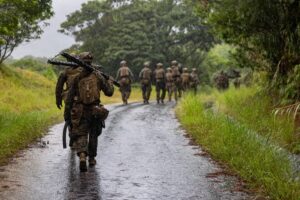
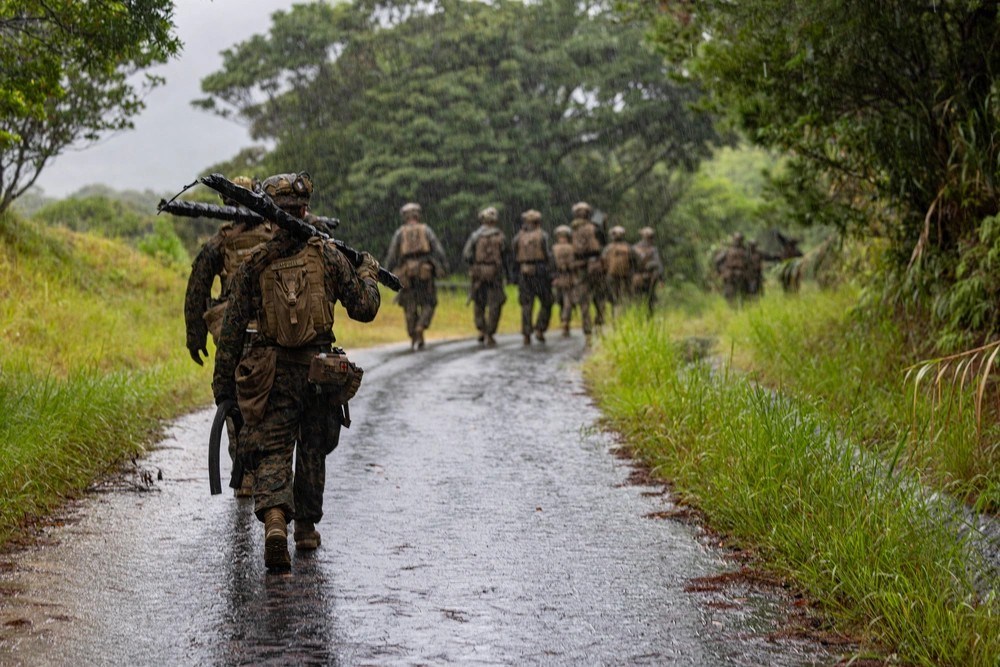
Japan and the United States will expand community education and launch a new orientation program for U.S. military personnel following the indictment of a Marine over the suspected robbery and murder of a local woman.
Since the early October murder and subsequent arrest of a U.S. Marine heightened concerns over the large American troop presence in Okinawa, U.S. and Japanese officials have announced a slew of mandates as the two countries continue to hold meetings to discuss effective preventative measures to ensure no other incident occurs.

In a Friday press conference, Japanese Foreign Minister Toshimitsu Motegi revealed that the government of Japan will “expand and enrich” education provided to U.S. military personnel stationed on Okinawa, which he points out was also requested by Okinawa Governor Genta Koja.
“I expressed that we are gravely receiving the burden felt by the Okinawa people regarding hosting military bases, and we at the national government tried to reduce the burden of the local community,” Motegi said in reflection of last week’s Okinawa Policy Council meeting.
“Based upon this, upon the [Koja] request received today, we will continue to reduce the Okinawa burden, and we will make determined efforts as follows,” he continued.
Last month, Japanese authorities arrested Marine Corps Lance Cpl. Devin Jacob Ballard, assigned to the III Marine Expeditionary Force headquartered at Camp Courtney in Okinawa, for the suspected robbery and murder of Anna Yagi, a 39-year-old Naha resident.
Japanese prosecutors recently indicted Ballard, alleging that he strangled Yagi with a phone cord at a hotel in the city and then stole her backpack with her wallet and other belongings inside.
An investigation of the body found that Yagi died from suffocation. Hotel security footage shows a person with hair and tattoos resembling Ballard’s entering a hotel room with a woman and leaving with items.
The arrest and indictment prompted U.S. officials to halt all military operations for two days for a Period of Training, followed by a Period of Reflection that concluded on Sunday. Other restrictions took effect as the reflection period ended, extending a curfew set for junior enlisted personnel and further prohibiting the consumption of alcohol past a set time for all service members.
During the conference, Motegi announced that the countries will also update the briefing materials used in the Okinawa Orientation Overview, a mandatory briefing given to new American military personnel arriving in Okinawa, incorporating input from the Okinawa Prefecture Government.
In an effort to reinforce the local community as a necessary supporter for U.S. military presence and to boost understanding of the Japanese legal system, the Ministry of Foreign Affairs’ ambassador for Okinawa affairs and the prefectural police will also provide briefings at an “early date.”
Next fiscal year, Japan and the U.S. will launch a new program to assist American military personnel in gaining a better understanding of how “Okinawa’s cultural history ties with the local community to become good neighbors.”
In addition to the program’s adjustments, the countries will expand the joint police patrols’ areas and frequency, Motegi shared.
Following the meetings, Koja disclosed during a Monday press conference he would request a “fundamental review” of the Status of Forces Agreement, or SOFA, a 1960 bilateral agreement that outlines the obligations of U.S. military personnel and their dependents in Japan, calling previous actions insufficient.
“In the wake of every incident or accident involving U.S. military service members or civilian employees, Okinawa has repeatedly lodged strong protests with the U.S. military and with the government of both Japan and the United States,” Koja said. “We have strongly urged them to take effective and fundamental measures, including a review of the Japan-U.S. Status of Forces Agreement. However, we have yet to see meaningful improvement.”
Koja said changes to SOFA that leave decisions to U.S. discretion are inadequate. He calls for revisions requiring the U.S. to promptly comply with Japanese requests to transfer suspects into custody and allow officials to test for environmental contamination on U.S. bases.
Read the full article here