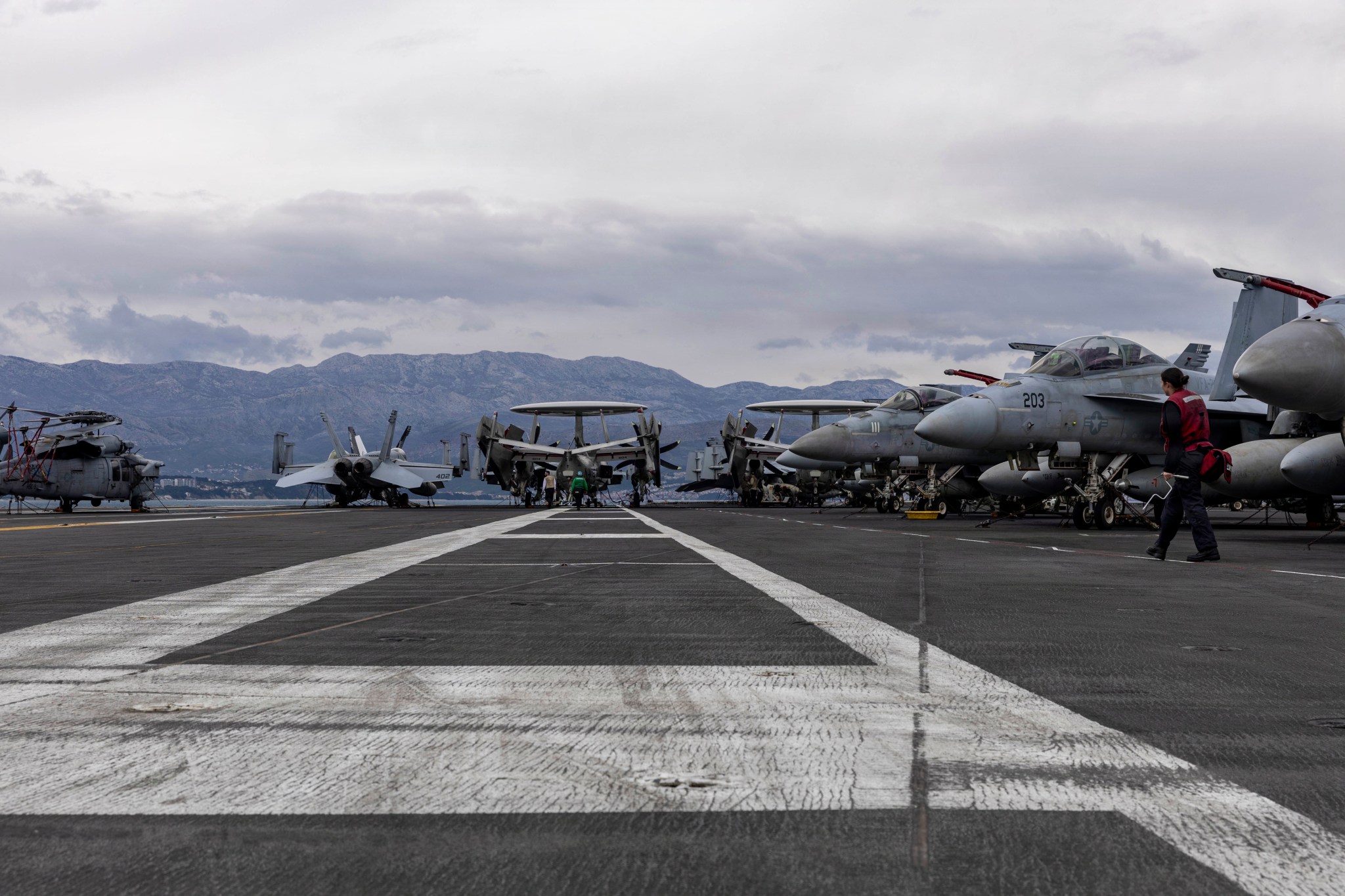
The U.S. Navy announced that fiscal 2026 brought the most unplanned catastrophic events involving aircraft and vessels in a decade.
Sixteen Class A aviation and 11 Class A afloat mishaps occurred during that span, according to data released by the Navy Safety Command and updated Monday.

The Navy defines Class A mishaps as those that cause $2.5 million or more in damage or destruction of an aircraft or lead to fatalities or permanent total disability.
The tally of unplanned aerial and afloat calamities includes several that occurred in the Middle East during the Iran war, which began on Feb. 28 after President Donald Trump launched Operation Epic Fury.
A U.S. Navy aircrewman went missing on July 1 after an MH-60S Sea Hawk helicopter, assigned to the USS George H.W. Bush in the Middle East, made an emergency landing in the Arabian Sea.
The missing sailor was later presumed dead. The other three crew members were rescued.
The controlled crash was not a result of any hostilities, and the Navy is investigating the cause of the crash, the service said.
The Navy also dealt with a high-profile fire aboard the world’s largest aircraft carrier.
The USS Gerald R. Ford experienced a non-combat blaze on March 12 in the main laundry room while it was operating in the Red Sea in support of Operation Epic Fury.
Three sailors were injured, and one was flown off the ship to receive medical treatment.
The fire took over 30 hours to put out and damaged more than 600 sailors’ sleeping arrangements, forcing many to sleep on floors and tables. The Ford was forced to leave the theatre for several days to undergo maintenance in Split, Croatia.
Other events occurred away from the fight.
On Sept. 28, six sailors and two aviators were injured after a landing mishap involving an E/A-18G Growler aboard the Nimitz-class aircraft carrier USS Dwight D. Eisenhower. Two pilots were attempting to land the aircraft at 6:18 p.m. off the coast of Virginia when an arresting gear failure forced them to eject from the aircraft.
In another incident, an F/A-18F Super Hornet experienced a left engine fire on July 1 while conducting a routine training mission over Naval Air Station Fallon, Nevada.
The crew safely landed the plane with no injuries.
Read the full article here