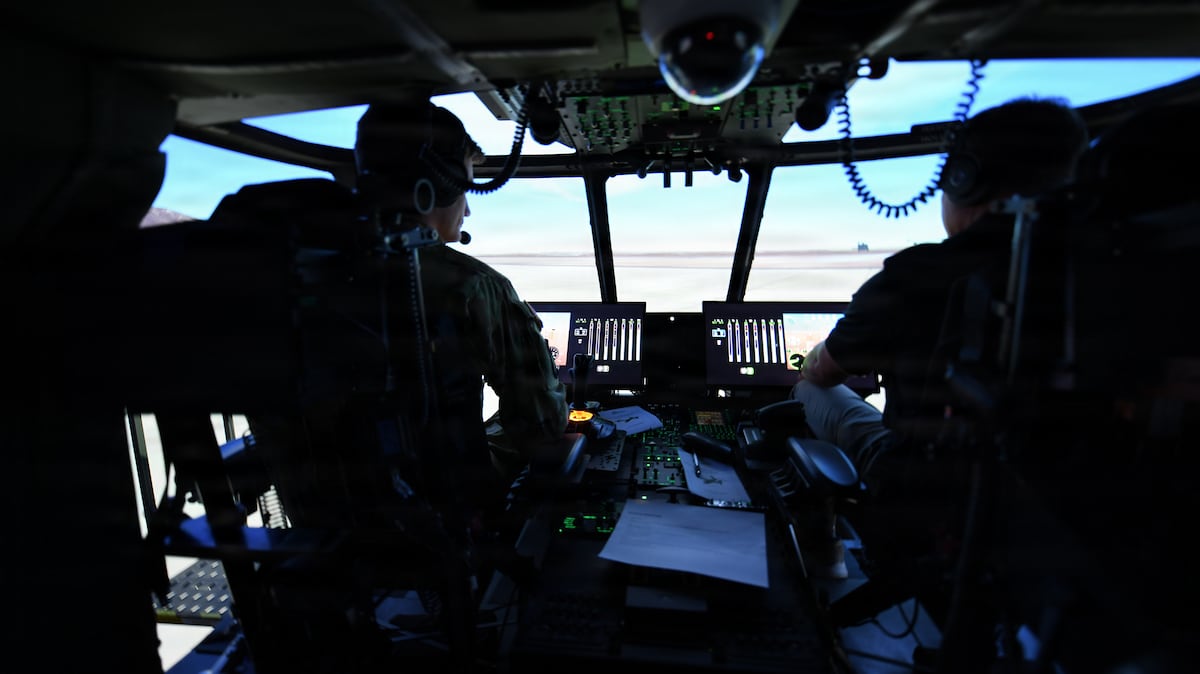
The U.S. Army is putting pilots in the cockpit of its new assault aircraft well before it enters the force for operational use, simulating flight to gather aviator’s feedback about the MV-75 Cheyenne’s display system and its cognitive workload impact.
The exercise brought Army aviators and experts together in May at Redstone Arsenal, Alabama, to test virtual versions of the MV-75’s cockpit, according to a Thursday release, which said the feedback will be incorporated into the aircraft’s design ahead of its first flight and ultimate delivery to the 101st Airborne Division.

The service’s new tiltrotor aircraft — named in honor of the Northern Cheyenne Tribe and the Cheyenne and Arapaho Tribe — was designed for use in the Pacific theater. The Army has sped up its development timeline and announced in April that the 101st Combat Aviation Brigade of Fort Campbell, Kentucky, is expected to field the MV-75 in 2027.
Chief Warrant Officer 2 Julian Dilg, a UH-60 pilot who participated in the weeklong exercise, said there was a noticeable cockpit change from current aircraft.
“The displays are inherently different, so we were able to work together and bounce ideas off of each other and gain insight,” he said in the release.
The collaboration was critical for the participants to “find enough common ground to work with in order to decide what changes needed to be made to display the information needed to fly it most effectively,” Chief Warrant Officer 2 Jordan Brooks, a CH-47 pilot, said in the release.
Army and Bell engineers have begun incorporating the feedback into the aircraft’s cockpit design by adjusting display symbols, improving menu navigation and improving alerting. One recommendation prompted by the exercise was the push to group power and performance data together, a change they said would make decisions easier, per the release.
The evaluation comes as militaries prepare for future battlespaces defined by drones and inundated with data. Future pilots may be expected to contend with fleets of unmanned aircraft and sensors in a crowded airspace, meaning they will have to process unprecedented amounts of information.
Eve Sampson is a reporter and former Army officer. She has covered conflict across the world, writing for The New York Times, The Washington Post and The Associated Press.
Read the full article here